
Beginner-Friendly Pilates Classes in North Conway

Table of Contents
What Makes Pilates Classes Beginner-Friendly
Signs of a Truly Welcoming Studio
What to Wear to a Pilates Class
Layering for Heated Studios
Benefits of Pilates for Beginners
Mat vs. Reformer Pilates: Which Should a Beginner Choose?
Yoga Class Pricing and Pilates Drop-In Rates
What Drives the Price Up or Down
Intro Offers and New-Student Rates
Memberships and Class Packages
The True Cost of a Beginner's First Month
Pilates for Specific Physical Limitations
Lower Back Pain
Knee Issues
Shoulder and Neck Tension
Post-Rehab and Physical Therapy
Pregnancy and Postpartum
How to Communicate Limitations Before Class
Virtual and Hybrid Options for Beginners
Conclusion
Frequently Asked Questions
Last Updated: September 25, 2026
What Makes Pilates Classes Beginner-Friendly
A beginner-friendly Pilates class is one where newcomers can move at their own pace without feeling lost or judged. At Hot Asana Studio, our classes are designed to be welcoming for first-timers.

The clearest sign of a welcoming studio is not the equipment or the playlist. It is how the instructor treats the person in the back row who has never touched a reformer before.
Instructors introduce themselves and ask about injuries before class starts
Every exercise comes with at least one easier variation
Class sizes stay small enough for hands-on corrections
No one is expected to already know the terminology
Signs of a Truly Welcoming Studio
Look for a few practical details before you book. Does the schedule list a dedicated intro or level 1 class? Does the studio describe its classes in plain language rather than jargon? Do reviews mention instructors by name?
What to Wear to a Pilates Class
Wear fitted athletic clothing you can move in, and skip anything too loose. Form-fitting tops and leggings let your instructor see your alignment and correct your posture before a small mistake becomes a habit.
A few practical notes:
Avoid baggy shirts that bunch up when you lie on your back
Skip zippers, buttons, and heavy jewelry that press into the mat
Bring a water bottle and a small towel
Tie back long hair so it stays off the mat
Layering for Heated Studios
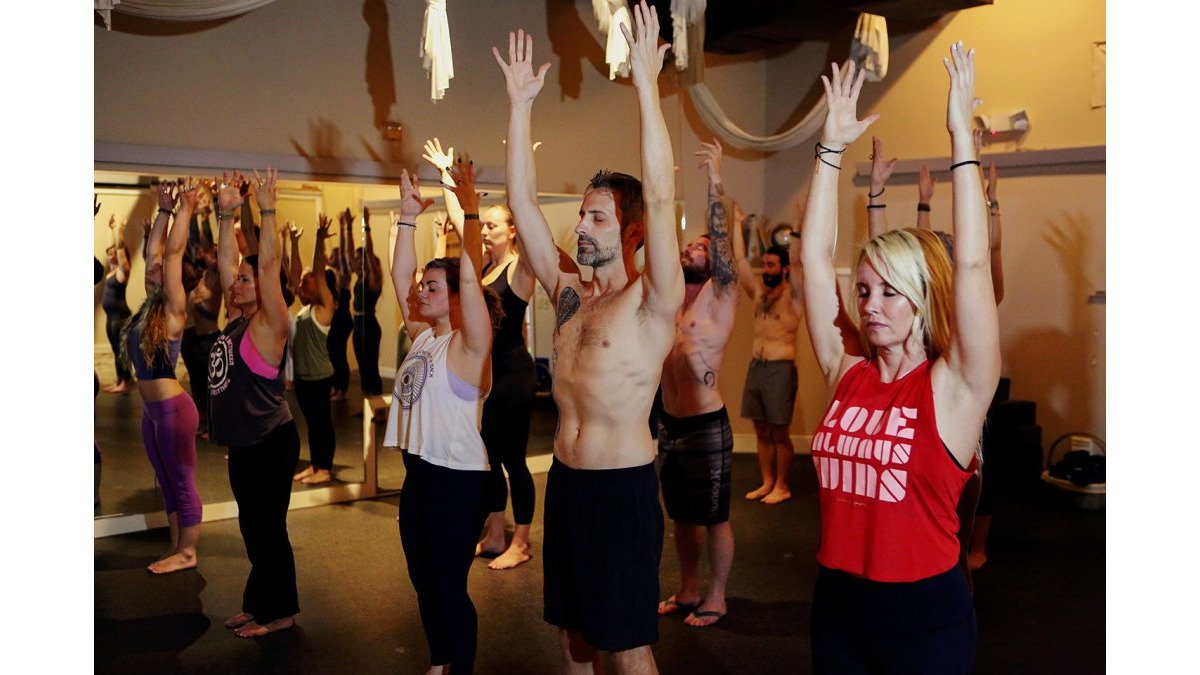
If you are trying a heated class, dress lighter than you think you need. A fitted tank and leggings handle most heated rooms well, and a light layer you can shed after the warm-up keeps you comfortable before class begins.
Bring a towel. You will want it.
Benefits of Pilates for Beginners
The benefits of pilates for beginners show up faster than most people expect. Newcomers often notice better posture and easier daily movement within a few weeks of consistent practice.
The bigger gains are less visible:
Improved body alignment and posture correction
Greater flexibility and mobility training
Stronger mind-body connection and body awareness
Muscle toning without heavy loading on joints
Pro Tip The thing nobody tells you about Pilates is that the breathing cues do most of the work early on. Newcomers who focus on matching breath to movement progress faster than those chasing harder exercises.
Mat vs. Reformer Pilates: Which Should a Beginner Choose?
Start with mat pilates if you are brand new, then add reformer pilates once the basic movements feel natural. Mat classes teach you how to control your own bodyweight, which is the foundation every reformer exercise builds on.
Factor | Mat Pilates | Reformer Pilates |
Equipment | Mat, small props | Spring-loaded carriage |
Learning curve | Gentle | Moderate |
Joint support | Minimal | High |
Best for | Building body awareness | Adding resistance and support |
Yoga Class Pricing and Pilates Drop-In Rates
Most studios price classes in three ways: a single drop-in rate, a class package, and a monthly membership. The drop-in rate is the most flexible, but the per-class cost drops sharply once you commit to a package or membership.
Pricing Model | Typical Commitment | Best For |
Single drop-in | One class, no contract | Testing a studio before committing |
Class package | 5-10 classes, prepaid | Attending once a week |
Monthly membership | Recurring, auto-renew | Attending two or more times a week |
What Drives the Price Up or Down
Three variables move the number more than anything else:
Class type. Reformer classes almost always cost more than mat classes because the equipment is expensive to buy and maintain. Expect reformer drop-ins to run meaningfully higher than mat drop-ins at the same studio.
Class length and format. A 45-minute express class is usually cheaper than a 60- or 75-minute session. Heated and sculpt formats sometimes carry a small premium.
Time of day. Off-peak morning and midday slots are frequently discounted, while after-work and weekend classes rarely are.
Intro Offers and New-Student Rates
Nearly every studio runs a new-student special, often a discounted first class, a two-week unlimited pass, or a reduced-price intro package. These are the single best way to sample a studio without committing. Two cautions:
Intro offers are usually limited to first-time students and cannot be repeated.
Some auto-convert into a full-price membership if you do not cancel before the trial ends. Read the terms before you enter a card number.
Memberships and Class Packages
If you plan to attend once a week, a package usually beats paying drop-in every time. If you plan to attend two or more times a week, a monthly membership is typically the better value.
Watch Out Do not buy a large package before your first class. Attend one session, confirm you like the instructor and the room temperature, then commit. Non-refundable packages are the most common regret among new students.
The True Cost of a Beginner's First Month
Budget for more than the class fee. A realistic first month includes the class itself, a pair of grip socks if your studio requires them, and possibly a mat if you plan to practice at home. Grip socks are a one-time purchase that lasts months. If you own a mat already, you have eliminated the only other recurring equipment cost.
Pilates for Specific Physical Limitations
Pilates adapts well to specific physical limitations, but the adaptation has to be intentional. If you have a bad knee, a sensitive lower back, or a shoulder that flares up, tell your instructor before class begins. A qualified instructor will offer modifications on the spot: reducing range of motion, using a prop for support, or swapping an exercise for a gentler version.
Lower Back Pain
This is the most common reason beginners seek out Pilates, and it is also where the mat-versus-reformer choice matters most. On a mat, exercises like the hundred, roll-ups, and leg lifts load the lower back directly, so a beginner with an irritated back often needs a pillow under the hips, a bent-knee variation, or a smaller range of motion.
Knee Issues
Kneeling poses and deep flexion are the usual trouble spots. Instructors typically swap kneeling work for seated or side-lying variations and reduce the bend angle. If you have had a knee replacement or a recent injury, ask specifically whether the class includes kneeling transitions, because those are hard to modify mid-flow.
Shoulder and Neck Tension
Many beginners carry tension in the neck and shoulders, and the classic Pilates head-lift position can aggravate it. The fix is usually a small pillow or folded towel under the head, plus keeping the chin slightly tucked rather than jutting forward. If you have a history of shoulder impingement, avoid loading the arms overhead until an instructor has checked your form.
Post-Rehab and Physical Therapy
Pilates and physical therapy are not the same thing, and it helps to know the difference before you book. Physical therapy is a treatment plan for a diagnosed condition, usually prescribed and supervised by a licensed physical therapist. Pilates is a fitness method that can complement rehab once you are cleared for general exercise.
Pregnancy and Postpartum
Prenatal Pilates is widely offered, but the modifications change by trimester. Lying flat on the back becomes uncomfortable for many people after the first trimester, so instructors shift to side-lying and seated work. Postpartum, the priority is usually rebuilding the deep core and pelvic floor before returning to intense abdominal work. Tell your instructor your stage and any clearance from your provider.
How to Communicate Limitations Before Class
The single most useful thing you can do is arrive five to ten minutes early and give the instructor a two-sentence summary: what hurts, and what movements you have been told to avoid. You do not need a diagnosis. "My lower back flares up when I lie flat, and my therapist said no deep forward folds" is enough for an instructor to plan your modifications.
Virtual and Hybrid Options for Beginners
Virtual classes remove the two biggest barriers for newcomers: travel time and the fear of being watched. Many studios now offer live-streamed sessions alongside in-studio classes, and some record them for later.
Conclusion
Starting something new takes nerve, especially when you are not sure you will keep up. The right studio removes that worry before you ever step on a mat.
Frequently Asked Questions
What should I expect in my first beginner Pilates class?
Your first class typically starts with a brief introduction and a warm-up focused on breathing and gentle movement. Instructors explain each exercise and offer modifications, so you can follow along at your own pace. Expect to use a mat and possibly small props like resistance bands or light weights. Most beginner-friendly studios, including Hot Asana Studio, keep class sizes small so you get personal attention. Wear comfortable clothing you can move in, bring water, and arrive a few minutes early to set up.
Do I need to be flexible to start Pilates?
No. Pilates is designed to build flexibility gradually, not require it upfront. The exercises focus on core strength, posture correction, and body alignment, which naturally improve flexibility over time. Instructors are trained to modify movements for tight hamstrings, stiff shoulders, or limited mobility. If you can breathe and lie down on a mat, you can start. Many beginners see noticeable gains in flexibility within a few weeks of consistent practice.
How often should a beginner practice Pilates to see results?
Most beginners benefit from two to three sessions per week. This frequency allows your muscles to adapt without overdoing it, and it helps you build the mind-body connection that Pilates emphasizes. If you are new to exercise, start with one or two classes per week and add more as you feel comfortable. Consistency matters more than intensity. Even one weekly class can improve core strength and posture if you practice regularly over several months.
What is the difference between mat Pilates and reformer Pilates?
Mat Pilates uses only your body weight and sometimes small props, performed on a padded mat. It emphasizes core stability and is easy to do at home. Reformer Pilates uses a sliding carriage with springs for resistance, which can support your body and add variety. Beginners often start with mat classes to learn the fundamentals, then try reformer for a new challenge. Both build strength and flexibility, so choose based on your comfort level and what your local studio offers.
Register Now
Comments